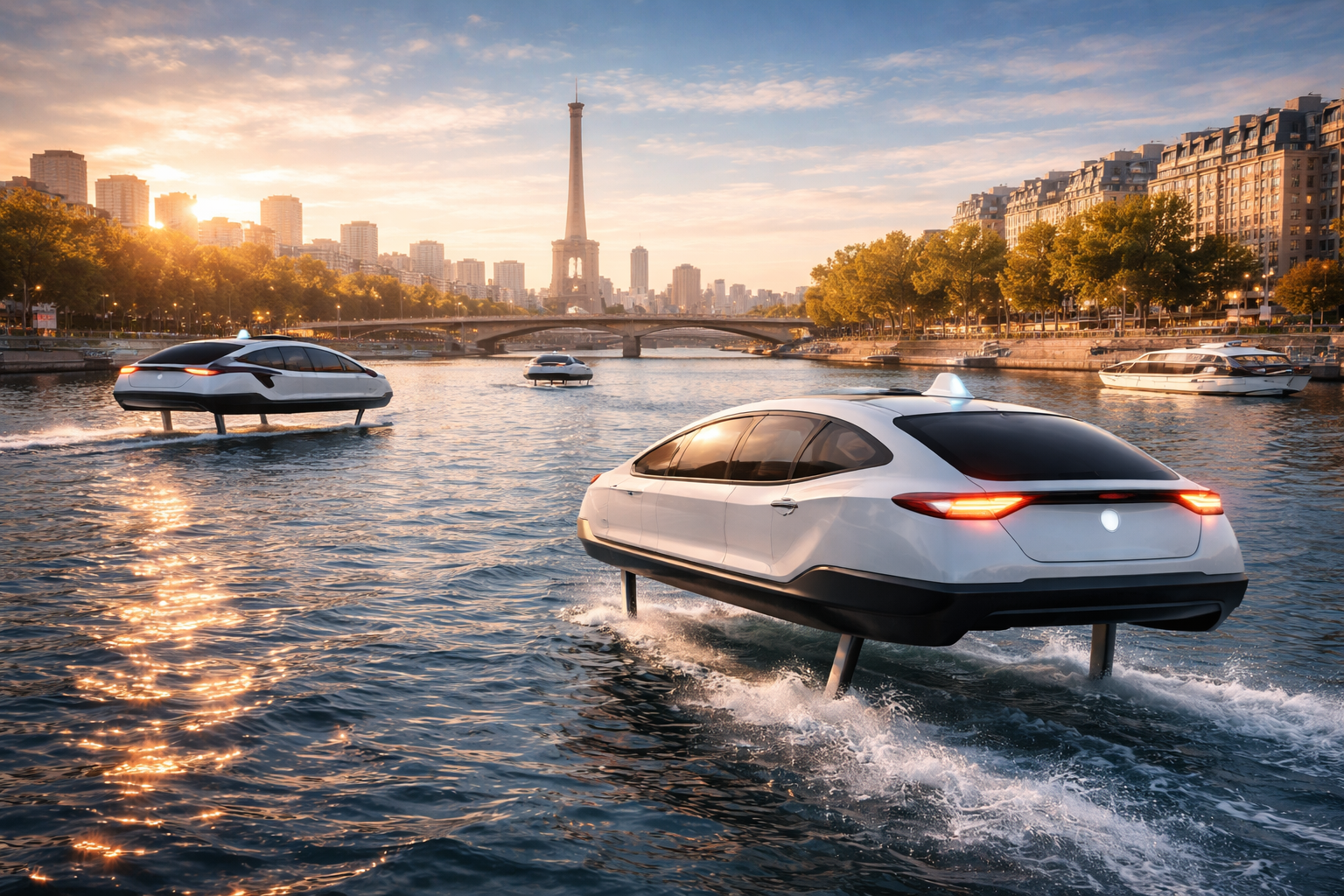
A new generation of electric “flying” boats is emerging as a promising solution to urban transportation challenges, offering a cleaner, faster, and more efficient way to move through crowded cities. These innovative vessels, known as hydrofoil electric boats, are designed to glide above the water’s surface using wing-like structures beneath their hulls. By lifting the boat out of the water at speed, they significantly reduce drag, enabling smoother travel, lower energy consumption, and minimal wake. As cities worldwide struggle with traffic congestion, pollution, and aging infrastructure, these futuristic boats are gaining attention as a potential game changer.
Unlike traditional boats, hydrofoil vessels operate by using underwater foils that generate lift as the boat accelerates. Once the vessel reaches a certain speed, the hull rises above the water, reducing resistance and allowing the boat to “fly.” When combined with electric propulsion systems, this design offers several advantages. Electric motors are quieter, produce zero direct emissions, and require less maintenance than combustion engines. Together, these features make electric hydrofoil boats particularly appealing for urban waterways, where noise reduction and environmental impact are critical concerns.
Several companies and startups are already testing and deploying these boats in cities across Europe, North America, and Asia. Early trials have shown that electric hydrofoil ferries can operate efficiently on rivers, lakes, and coastal routes, offering an alternative to road-based transport. In cities with extensive waterways, such as those with rivers running through dense urban centers, these boats could help reduce reliance on cars and buses. By shifting some commuter traffic to the water, urban planners hope to ease congestion and improve overall mobility.
One of the key benefits of flying electric boats is their speed and efficiency. Because they experience less drag than conventional boats, they can travel faster while using less energy. This makes them well-suited for short to medium-distance routes within cities. Commuters could potentially travel between districts in a fraction of the time it would take by road during peak hours. Additionally, the smooth ride provided by hydrofoil technology reduces wave impact, making the journey more comfortable for passengers and less disruptive to surrounding environments.
Environmental sustainability is another major factor driving interest in these vessels. Transportation is one of the largest sources of greenhouse gas emissions in urban areas, and cities are under increasing pressure to adopt cleaner alternatives. Electric hydrofoil boats produce no exhaust emissions during operation and can be powered by renewable energy sources. Their reduced wake also helps protect riverbanks and aquatic ecosystems, addressing concerns associated with traditional boat traffic. As governments implement stricter environmental regulations, such technologies are likely to become more attractive.
However, despite their potential, several challenges remain before flying electric boats can be widely adopted. Infrastructure is a significant hurdle. Cities may need to invest in new docking facilities, charging stations, and maintenance systems to support these vessels. Integrating water-based transport into existing urban transit networks also requires careful planning to ensure seamless connections for passengers. Without proper infrastructure, even the most advanced technology may struggle to achieve large-scale impact.
Cost is another important consideration. While operating costs for electric boats can be lower over time, the initial investment in hydrofoil technology and battery systems can be high. This may limit adoption, particularly in developing regions or cities with limited budgets. Additionally, battery capacity and charging times remain technical challenges, especially for routes requiring longer distances or higher passenger volumes. Continued advancements in battery technology will be crucial in overcoming these limitations.
Safety and regulation also play a critical role in the future of this technology. Operating vessels at higher speeds above the water introduces new safety considerations, particularly in busy waterways shared with other boats. Authorities will need to establish clear guidelines and standards to ensure safe operation. Training for operators, as well as the development of automated navigation systems, may help reduce risks and improve reliability.
Looking ahead, the integration of advanced technologies such as artificial intelligence and autonomous navigation could further enhance the capabilities of flying electric boats. AI systems could optimize routes, monitor vessel performance, and improve safety by detecting obstacles in real time. Autonomous or semi-autonomous boats may eventually reduce the need for human operators, lowering operational costs and increasing efficiency. These innovations could make water-based transport more accessible and scalable in the future.
The potential impact of electric hydrofoil boats extends beyond transportation alone. By revitalizing urban waterways, they could reshape how cities are designed and experienced. Waterfront areas may become more connected, with increased economic activity and improved accessibility. Tourism could also benefit, as these boats offer a unique and futuristic travel experience. In some cases, they may even encourage cities to invest more in preserving and utilizing their natural water resources.
Ultimately, flying electric boats represent a compelling vision for the future of urban mobility. They combine advances in engineering, sustainability, and design to address some of the most pressing challenges facing modern cities. While there are still obstacles to overcome, ongoing research, investment, and pilot programs suggest that these vessels could become a common sight in urban waterways in the years to come.
As cities continue to search for innovative solutions to transportation problems, the rise of electric hydrofoil boats highlights the importance of thinking beyond traditional systems. By leveraging the untapped potential of waterways, these “flying” boats could play a key role in creating cleaner, more efficient, and more resilient urban transport networks.