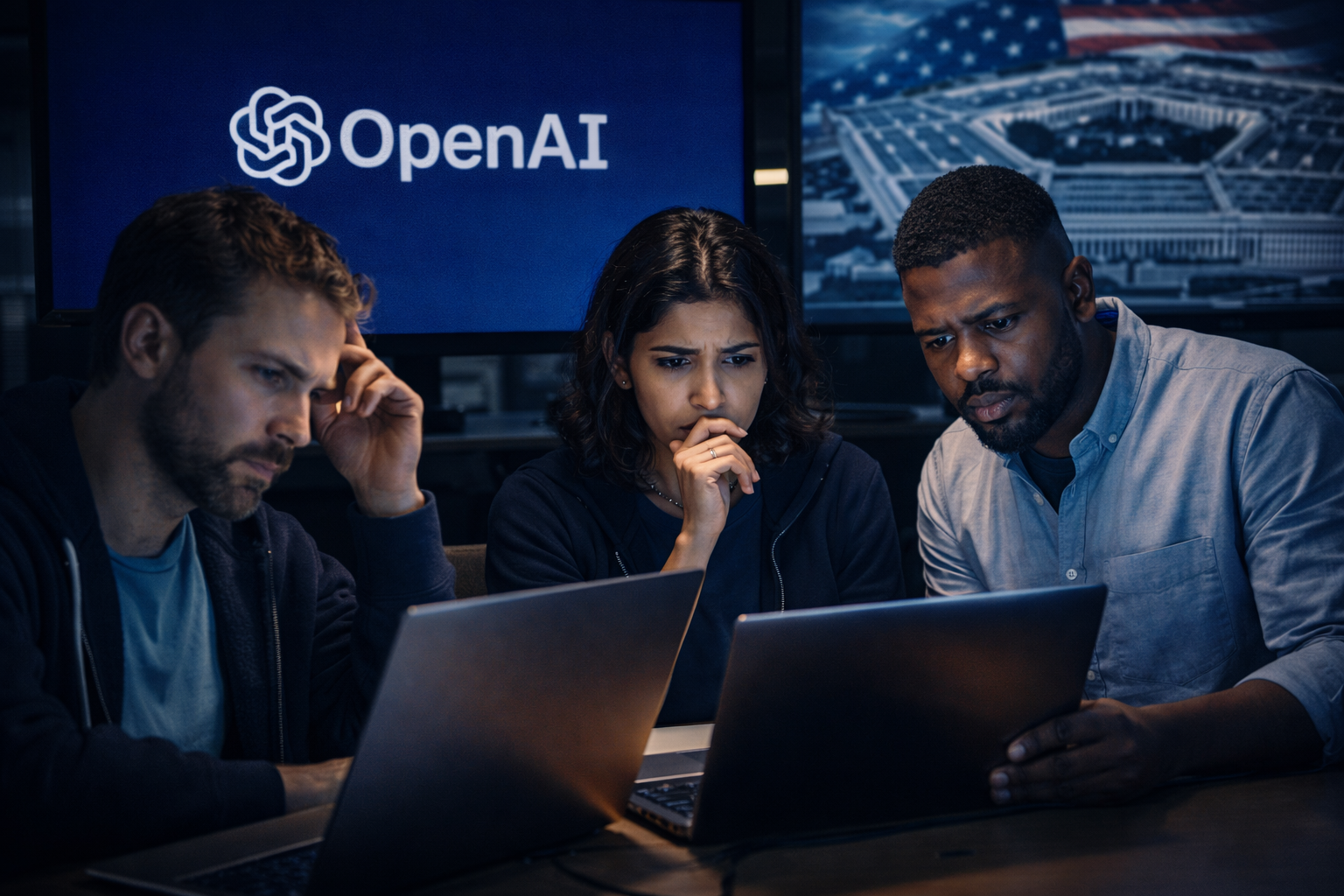
A growing number of employees within OpenAI are reportedly expressing frustration and concern over the company’s involvement in a deal linked to the U.S. Department of Defense, highlighting internal tensions about the role of artificial intelligence in military applications. While the agreement reflects the expanding influence of AI in national security, it has also sparked debate about ethics, transparency, and the future direction of one of the world’s most prominent AI organizations.
According to multiple reports and discussions within the company, some staff members are uneasy about how OpenAI’s technology may be used in defense-related contexts. The Pentagon, like many government agencies, has increasingly turned to artificial intelligence to support a range of activities, from data analysis and cybersecurity to logistics and strategic planning. However, the potential for AI to be applied in military operations raises complex ethical questions—questions that are now being actively debated inside OpenAI itself.
Employees who are critical of the deal are said to be particularly concerned about the possibility that AI systems could be used in ways that contribute to harm or conflict. While the exact details of the agreement have not been fully disclosed, the association with defense work has been enough to trigger unease among some workers who joined the company with the expectation that its technology would primarily serve civilian and beneficial purposes.
This is not the first time a technology company has faced internal pushback over government contracts. In recent years, employees at several major tech firms have voiced objections to projects involving military or law enforcement agencies. These disputes often center on the balance between national security interests and the ethical responsibilities of companies developing powerful technologies.
At OpenAI, the situation reflects a broader tension between its mission to ensure that artificial intelligence benefits humanity and the practical realities of operating in a world where governments are major stakeholders in advanced technology. The company has positioned itself as a leader in responsible AI development, emphasizing safety, alignment, and long-term societal impact. For some employees, involvement in defense-related work appears to conflict with these principles.
Supporters of the partnership, however, argue that engagement with government institutions is both necessary and inevitable. They point out that AI is already playing a significant role in global security, and that it is better for responsible organizations to be involved in shaping how the technology is used. From this perspective, collaboration with the Pentagon could provide an opportunity to promote ethical standards and reduce the risk of misuse.
Proponents also note that not all defense applications are directly related to combat. AI can be used for tasks such as disaster response, medical support, infrastructure protection, and intelligence analysis. These uses, they argue, can have positive outcomes and align with broader humanitarian goals.
Despite these arguments, the internal debate appears to be intensifying. Some employees are reportedly calling for greater transparency about the nature of the deal, including clearer communication about how the technology will be applied and what safeguards are in place. Others are pushing for stronger internal policies that define the boundaries of acceptable use, particularly when it comes to military involvement.
The leadership at OpenAI faces a delicate challenge in navigating these concerns. On one hand, the company must maintain trust among its workforce, many of whom are deeply invested in the ethical implications of their work. On the other hand, it operates in a competitive and rapidly evolving industry where partnerships with governments and large institutions can be strategically important.
The situation also underscores the broader issue of governance in artificial intelligence. As AI systems become more powerful and widely deployed, questions about who controls them—and for what purposes—are becoming increasingly urgent. Companies like OpenAI are at the center of this conversation, not only as developers of cutting-edge technology but also as influential voices in shaping how it is used.
Experts say that internal dissent within organizations can play a valuable role in guiding responsible innovation. By raising concerns and prompting discussion, employees can help ensure that ethical considerations are not overlooked in the pursuit of progress. However, unresolved tensions can also lead to morale issues, talent retention challenges, and public scrutiny.
Public perception is another factor that may influence how the situation unfolds. OpenAI has built a reputation as a company focused on the safe and beneficial development of AI. Any perception that it is moving toward controversial applications could affect how it is viewed by users, partners, and regulators. At the same time, increased transparency and open dialogue could help address concerns and reinforce trust.
The debate within OpenAI is part of a larger global conversation about the role of artificial intelligence in defense. Governments around the world are investing heavily in AI capabilities, recognizing their potential to transform military operations. This has led to calls for international agreements and ethical guidelines to govern the use of AI in warfare.
Some organizations and advocacy groups have urged companies to adopt clear policies that limit or prohibit involvement in certain types of military applications, particularly those related to autonomous weapons. Others argue that engagement, rather than avoidance, is the more practical approach, allowing companies to influence how technologies are deployed.
For OpenAI, the path forward may involve finding a balance between these perspectives. This could include establishing clearer internal guidelines, increasing transparency around partnerships, and continuing to engage with employees on ethical issues. How the company responds to these concerns may shape not only its internal culture but also its role in the broader AI ecosystem.
Ultimately, the situation highlights the growing complexity of developing and deploying advanced technologies in a world where the stakes are high and the consequences far-reaching. Artificial intelligence has the potential to bring significant benefits, but it also raises difficult questions about responsibility, accountability, and the limits of innovation.
As the debate continues, one thing is clear: the decisions made today about how AI is used will have lasting implications for the future. For OpenAI and its employees, navigating these challenges will require careful consideration, open communication, and a commitment to aligning technological progress with ethical values.